Easy Free Christmas Present Ornament Patterns to Crochet
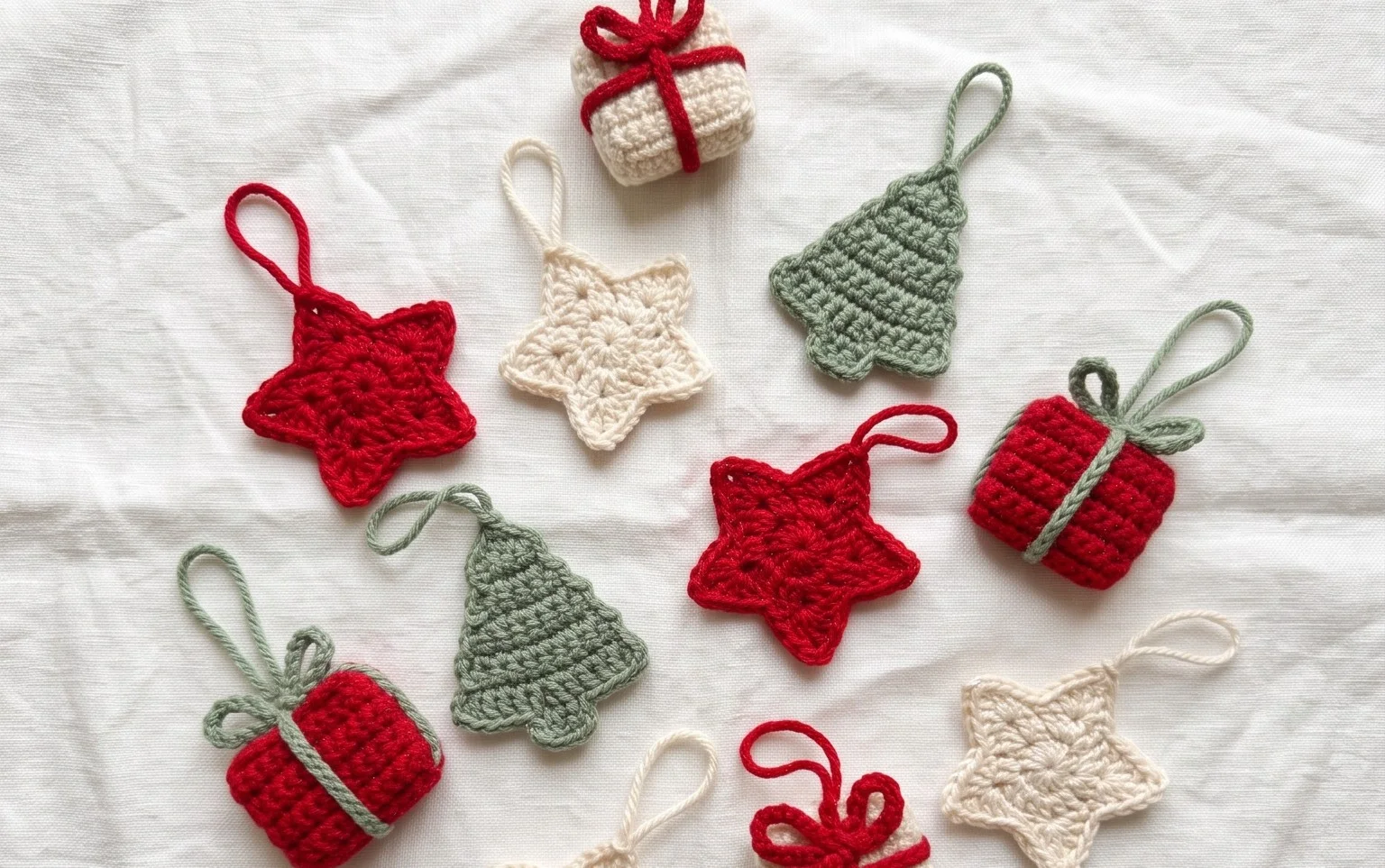
A tiny crocheted present adds a soft, handmade touch to a Christmas tree, with neat little sides and a ribbon-like finish that stands out among glass baubles. These gift-box ornaments suit new crocheters who want to practise steady stitches, as well as experienced makers putting together small gifts or decorating a home for the holidays. They use a modest amount of yarn, so leftover scraps in festive colors can become a collection of miniature parcels. As you work, you’ll get familiar with shaping a compact box and adding details that make it look wrapped. The finished ornament is light enough for a branch and charming tied onto a larger present.
Why You’ll Love This Pattern
A cotton crochet washcloth is a useful first project: it is worked flat in simple single crochet, and its compact size makes it easy to carry in a project bag. The steady rows give you room to practise even tension and neat turning chains without needing to shape the fabric.
One washcloth uses a modest amount of yarn, so a partial ball of cotton can be enough. The finished square also makes a practical handmade gift, especially when paired with a bar of soap or folded into a small care package.
The rows were easy to follow, and I finished my first washcloth in an evening. I liked having a simple project to practise keeping my edges straight.
— Maya, beginner crocheter
Pattern Overview & Skill Level
- Skill Level: Beginner. You need to chain and work single crochet stitches.
- Approximate Time: About 3–5 hours, depending on your pace and the yarn you use.
- Construction: The washcloth is made as one flat square in turned rows, then finished by weaving in the two yarn ends.
- Finished Dimensions & Sizing: Approximately 10 × 10 in (25 × 25 cm) after washing and drying. Small differences in tension will change the final size.
Materials & Supplies Needed
- Yarn: About 100 yd (91 m) of worsted-weight cotton yarn, weight #4, in one color. Cotton absorbs water and holds up well to frequent washing.
- Hook: 5.0 mm (US H-8) crochet hook. If your fabric feels stiff, try a 5.5 mm (US I-9) hook; the washcloth may finish a little larger.
- Notions: Tapestry needle for weaving in ends, scissors, and a ruler or tape measure. A locking stitch marker is optional for marking the first stitch of a row.
- Substitutions: A similarly thick cotton or cotton-blend yarn is the closest substitute. A thinner yarn will make a smaller, lighter cloth; a thicker yarn will make a larger, denser cloth and use more yardage. Acrylic is less absorbent than cotton, so check that it suits your intended use.
Stitch Guide & Abbreviations (US Terms)
- ch = chain.
- sc = single crochet.
- st = stitch.
- sts = stitches.
- rep = repeat.
For a single crochet, insert the hook into the stitch, yarn over and pull up a loop, then yarn over and pull through both loops on the hook. The turning chain in this pattern does not count as a stitch. Work the first single crochet into the first stitch of each row.
Step-by-Step Pattern Instructions
Washcloth
- Foundation: Ch 31. This gives you 30 stitches to work across the first row.
- Row 1: Sc in the second ch from the hook and in each ch across. Turn. (30 sts)
- Row 2: Ch 1, sc in each st across. Turn. (30 sts)
- Rows 3–30: Rep Row 2, keeping the same count of 30 sc in every row. Turn at the end of each row. (30 sts per row)
Finishing
After Row 30, fasten off, leaving a tail long enough to sew in comfortably. Pull the yarn tail through the last loop to secure it. Thread the tail onto a tapestry needle and weave it through several stitches on the wrong side, changing direction once so it is less likely to work loose. Weave in the foundation tail the same way, then trim the remaining yarn close to the fabric without cutting the stitches.
Check the edges before washing. If the cloth is noticeably wider or longer than 10 in (25 cm), your tension may be loose; if it is smaller, your tension may be tight. The stitch count should remain 30 across every row even if your finished measurements differ.
Care & Washing Instructions
- Wash cotton in warm water, up to 40°C (104°F), with similar colors; follow the yarn label if it gives a lower temperature.
- Dry flat or tumble-dry on low if the yarn label allows it. Avoid high heat, which can shrink cotton.
- Reshape the damp cloth into a square and smooth the edges flat; blocking is optional for a washcloth.
Pro Tips & Common Mistakes to Avoid
- Keep your loops at a consistent height. Pulling the working yarn tight can make the cloth stiff, while loose loops can leave gaps and uneven edges.
- Count the stitches at the end of each row. A row with 29 or 31 stitches usually means the first or last stitch was skipped, or an extra stitch was worked into the turning chain.
- Place a marker in the first stitch of a row if you often lose track of the edge. Move it up as you work, and remember that the turning chain does not count as a stitch.
- To adjust the size, add or remove foundation chains while keeping the total number of chains one greater than the number of stitches you want. More stitches and rows use more yarn; fewer make a smaller cloth.
Frequently Asked Questions
Can I use a different yarn fiber?
Yes. Cotton is a good choice when absorbency and frequent washing matter. A cotton blend can also work, but check the care label. Wool may felt or shrink with warm washing, and acrylic usually absorbs less water than cotton.
How can I make the washcloth smaller or larger?
Change the foundation chain to set the width, then work more or fewer rows to adjust the length. Keep one fewer single crochet than the number of foundation chains, because the first chain is skipped. A larger cloth will take more yarn and time.
Is this a suitable first crochet project?
Yes. It uses only chains and single crochet, with no increases, decreases, color changes, or seams. The main challenge is keeping the edges even, so count the 30 stitches after every row.
May I sell washcloths made from this pattern?
Check the designer’s terms before selling finished items, and follow any credit or selling conditions they specify. If you sell the cloth, describe the yarn fiber accurately and include its care instructions.
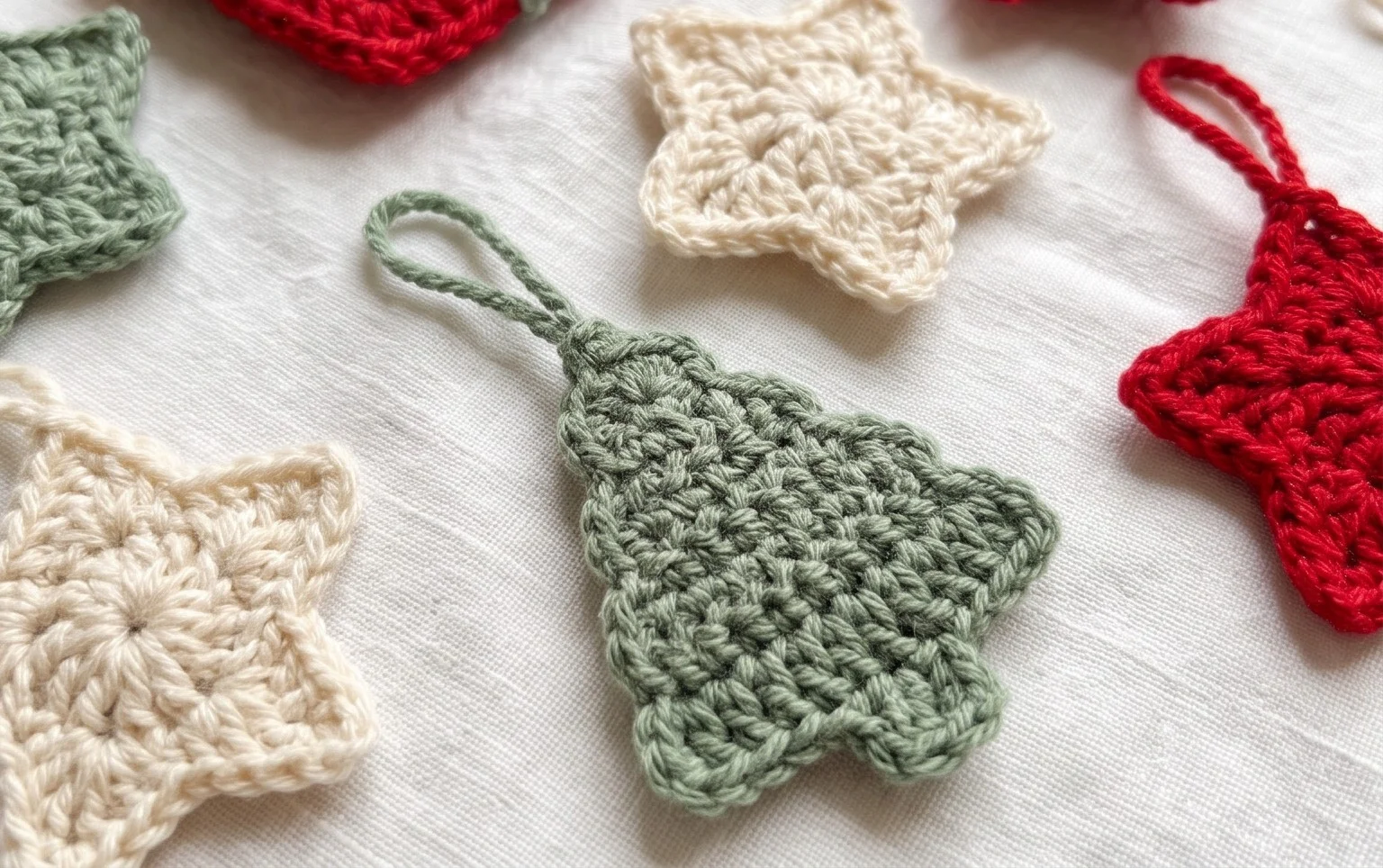
A small crocheted present ornament is a satisfying way to turn a few scraps of yarn into a keepsake you can bring out each December. Make a set in coordinated colors, or change the size by using a different yarn weight and matching hook; keep your stitches snug so the filling or seams stay tidy. Once the ornament is finished, add a loop for hanging or tie it onto a wrapped gift as an extra decoration. Share a photo of your finished piece on Pinterest or social media so other makers can see your color choices. Then browse the blog for more free crochet patterns to make for the holidays and beyond.