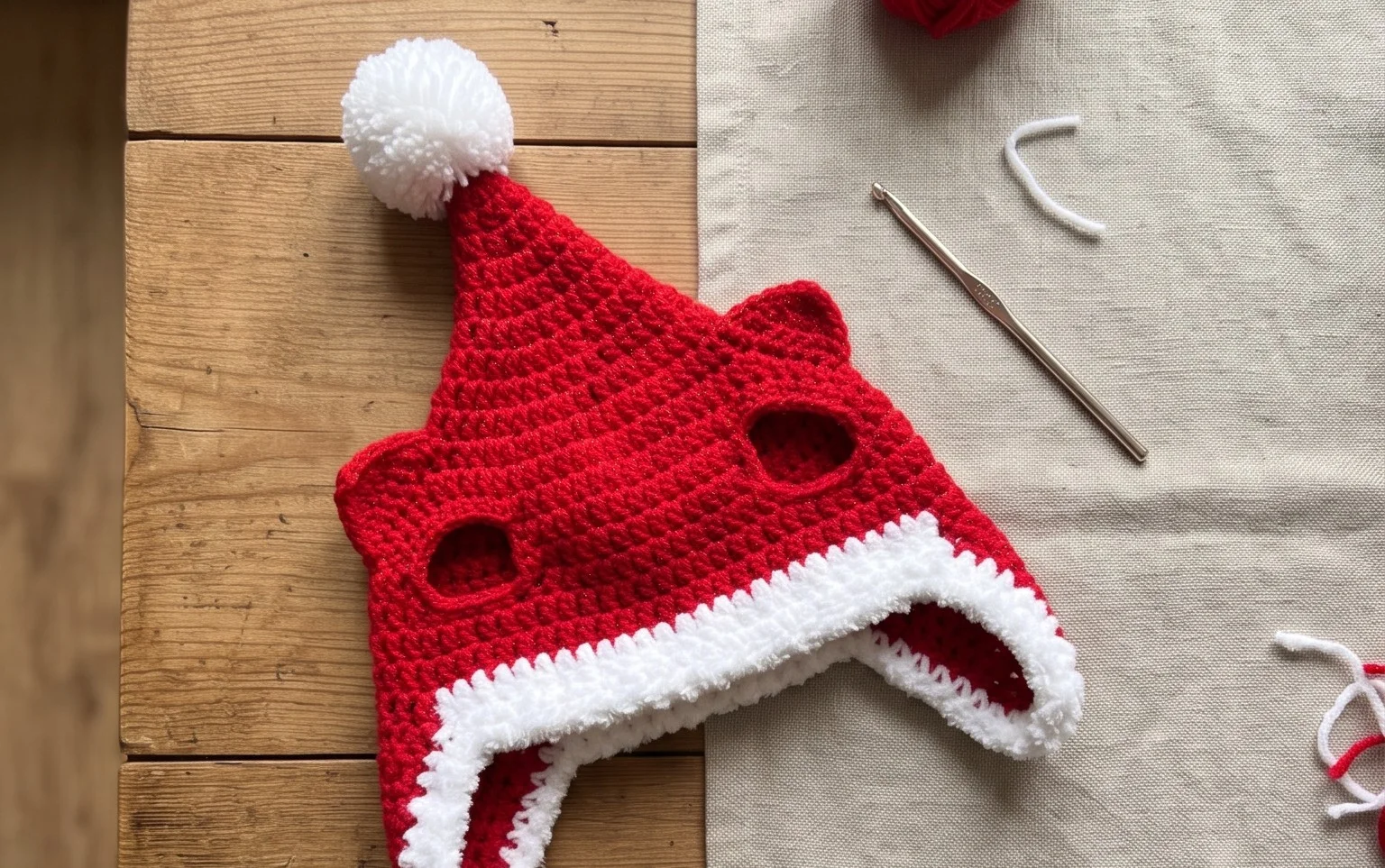
Beginner Christmas Elf Hat Crochet Pattern with Free Options
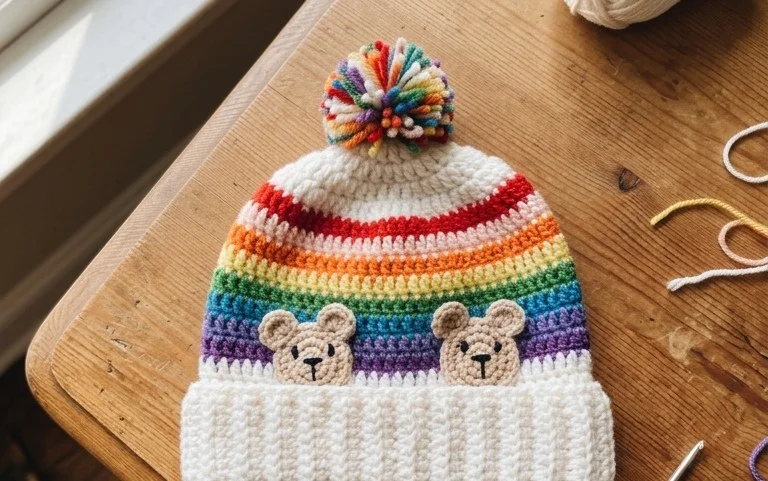
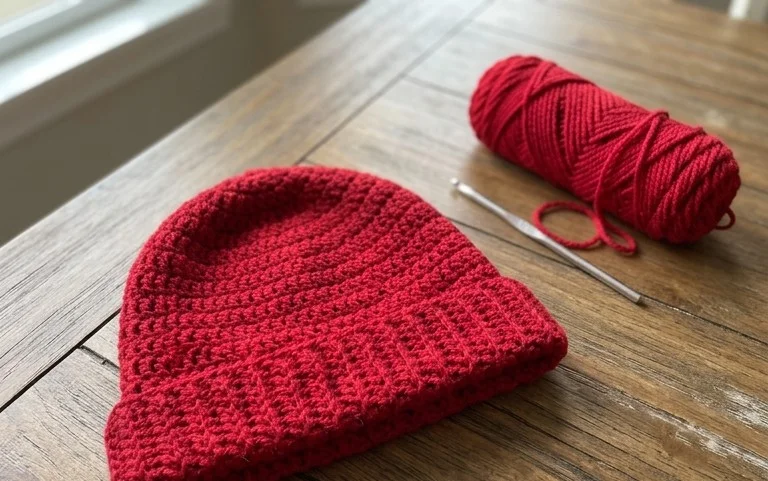
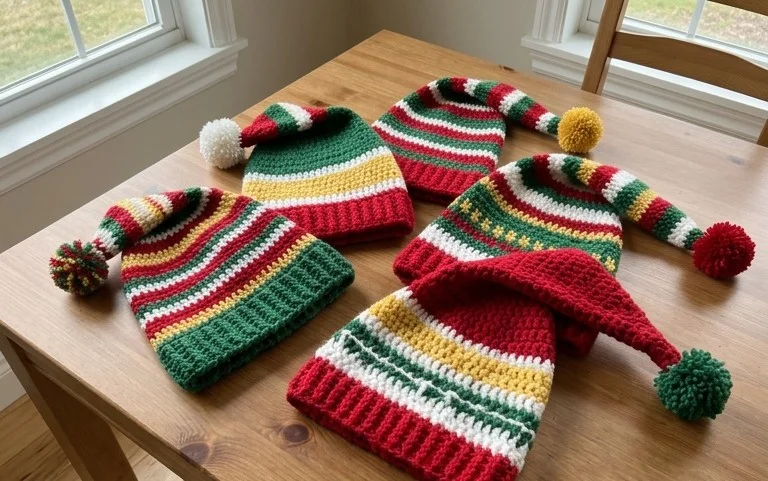
A pointed Christmas elf hat in cheerful stripes brings a little handmade fun to holiday photos, parties, and gift giving. The finished hat has a snug brim, a soft body, and a long tip that can finish with a pom-pom or jingle bell. This pattern roundup includes free and paid designs, with options for beginners who are comfortable working basic stitches and makers who want to try a new detail. You’ll find guidance on shaping the crown with increases, changing colors cleanly, and choosing a size that sits comfortably. A simple hat is satisfying to make because the stripes appear as you work, and a few small choices can give each version its own look. Use classic red and green, or pick colors that suit the person who will wear it.
Why You’ll Love This Pattern
This cotton dishcloth uses alternating single crochet and double crochet stitches to make a firm, lightly ridged fabric. The stitch repeat is easy to remember, and the straight edges make it a useful first project for practicing even tension.
It takes about two to three hours, uses less than one ball of worsted cotton, and makes a practical handmade gift. The simple rectangular shape also gives you room to focus on stitch height and neat edges without shaping or complicated joins.
The alternating stitches were easy to keep track of, and the finished cloth feels sturdy without being stiff. I made mine in an afternoon.
— Mara, beginner crocheter
Pattern Overview & Skill Level
- Skill Level: Beginner. You should know how to chain, single crochet, and double crochet.
- Approximate Time: Two to three hours, depending on your pace.
- Construction: A flat square worked back and forth in rows, with alternating single crochet and double crochet stitches.
- Finished Dimensions & Sizing: About 8 × 8 in (20 × 20 cm) after washing and drying flat, using the gauge below. Small differences in tension will change the final size.
Materials & Supplies Needed
- Yarn: About 75–90 yd (69–82 m) of worsted-weight cotton yarn, category #4. Choose one color or use a small amount of a second color for the final edging. Cotton absorbs water and holds up well to regular washing.
- Hook Size: 4.5 mm / 7, or the size needed to meet gauge. The US letter for this metric size is 7.
- Notions: Tapestry needle for weaving in ends, scissors, and a ruler or tape measure for checking gauge.
- Gauge: 16 stitches and 16 rows in the alternating stitch pattern measure 4 × 4 in (10 × 10 cm). Make a small swatch before starting if matching the finished size matters.
- Substitutions: A similar-weight cotton blend can work, though a high acrylic content may make the cloth less absorbent. Linen or cotton-linen yarn can feel firmer and may soften after washing. Changing yarn weight or hook size will change the finished dimensions and yardage needs.
Stitch Guide & Abbreviations (US Terms)
- ch: Chain.
- st / sts: Stitch / stitches.
- sc: Single crochet. Insert the hook in the stitch, yarn over and pull up a loop, yarn over and pull through both loops.
- dc: Double crochet. Yarn over, insert the hook in the stitch, yarn over and pull up a loop, yarn over and pull through two loops, then yarn over and pull through the remaining two loops.
- tapestry needle: A blunt-ended needle used to weave yarn tails into the fabric.
The turning chain does not count as a stitch. Each row alternates one sc and one dc, beginning with an sc, so every row has 16 sc and 16 dc.
Step-by-Step Pattern Instructions
Dishcloth
Use the 4.5 mm hook and worsted cotton. Chain loosely enough that the foundation edge does not pull tighter than the following rows. The turning chain is not included in the stitch count.
- Row 1: Ch 33. Sc in the second ch from the hook, dc in the next ch. Repeat sc in the next ch, dc in the next ch across to the end. You will have 32 stitches: 16 sc and 16 dc. (32 sts)
- Row 2: Ch 1 and turn. Sc in the first stitch, dc in the next stitch. Repeat sc in the next stitch, dc in the next stitch across. (32 sts)
- Rows 3–31: Ch 1 and turn. Repeat Row 2, working sc in the first stitch and alternating sc and dc across. Check that the last stitch is a dc. Each row has 16 sc and 16 dc. (32 sts each row)
- Row 32: Ch 1 and turn. Repeat Row 2 across. Fasten off, leaving a tail long enough to weave in securely. (32 sts)
Finishing
Thread the tail onto a tapestry needle. Weave it through several stitches on the wrong side, change direction, and weave it through a few more stitches so it is less likely to work loose during washing. Weave in the starting tail the same way. Do not pull the tails so tightly that the edge puckers.
Check that the cloth measures close to 8 in square. If the edges curl, wet the cloth, press out excess water in a towel, and lay it flat with the corners squared. Let it dry fully before using it.
Care & Washing Instructions
- Wash cotton in warm water, up to 40°C (104°F), or follow the yarn label if it gives a lower limit.
- Dry flat when possible; reshape the corners while the cloth is damp.
- Block lightly if the edges need straightening, and avoid stretching the fabric beyond its original size.
Pro Tips & Common Mistakes to Avoid
- Keep the foundation chain relaxed. A tight chain can draw in the bottom edge even when your rows are even. If needed, use a hook half a size larger just for the chain, then switch to the pattern hook.
- Count across each row. Check for 32 stitches, with 16 sc and 16 dc. The first stitch after the turning chain is an sc; accidentally skipping it makes the cloth narrower.
- Hide tails securely. Weave them through the backs of several stitches, then change direction. A short tail woven in only one direction can loosen with repeated washing.
- Adjust the size with care. To make a wider cloth, add an even number of stitches to the foundation chain so the alternating sequence ends with a dc. Add rows for extra length. Larger dimensions use more yarn; a 10 in square version will need roughly one and a half times as much yarn as this 8 in square cloth.
Frequently Asked Questions
Can I use acrylic yarn for this dishcloth?
You can, but acrylic is generally less absorbent than cotton and may not work as well for wiping counters or dishes. A cotton blend is a better substitute if you want a similar feel and function. Check the yarn label for washing instructions.
How can I make the dishcloth smaller?
Use a shorter foundation chain with an odd number of chains so the working stitches form an even number, then keep the alternating sc-and-dc sequence. For example, chaining 27 gives 26 stitches per row. Work fewer rows for a shorter cloth, and expect the finished size and yarn use to decrease.
Is this a good first crochet project?
Yes, if you have practiced chains, single crochet, and double crochet. The rows do not require increases or decreases. Count the first few rows carefully so you can catch a missed edge stitch before the sides begin to slope.
Can I sell dishcloths made from this pattern?
Check the designer’s terms before selling finished items, and follow any credit or selling requirements they specify. If you sell your work, describe the yarn and care needs accurately so buyers know how to wash it.
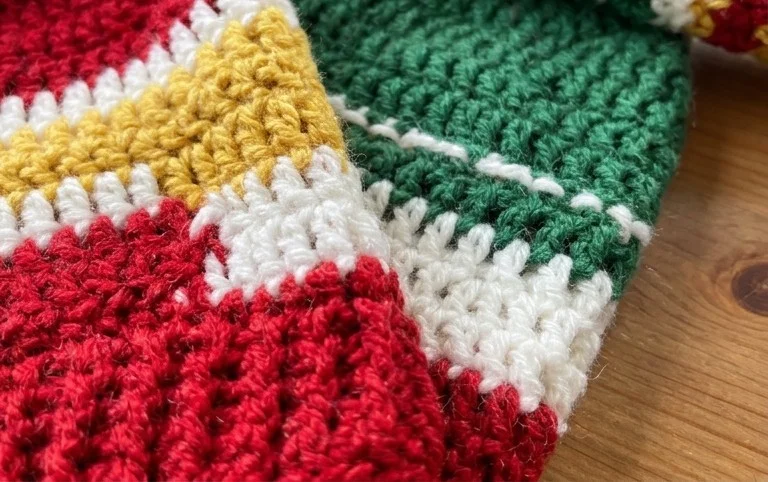
A finished elf hat is a cheerful handmade touch for a family photo, a holiday gathering, or a wrapped gift, and the stripes make the progress easy to see as you crochet. For a simple variation, replace the classic red and green with two colors the wearer already loves, keeping the brim in a solid shade for a tidy finish. Check the finished measurements before you add the final rounds so the hat fits comfortably over the ears. When yours is ready, share a photo on Pinterest or your favorite social platform; it’s always nice to see how different color choices turn out. Then explore more free crochet patterns on the blog for your next handmade project.